Monday, July 28, 2014

TPLF Releases Another Propaganda Video on Andargachew: Sound of Torture ...

ሕወሓት አቶ አንዳርጋቸውን በቲቪ ስታቀርብ ራሷን በራሷ ያጋለጠችባቸው 4 ቅጥፈቶች


  • 3312
     
    Share
  •  

ስንታየሁ ከሚኒሶታ
እንደተጠበቀው በሕወሓት መንግስት በሚመራው የኢትዮጵያ ፖሊስ ፕሮግራም ላይ አቶ አንዳርጋቸው ጽጌ እንዲቀርቡ ተደርጓል። የአቶ አንዳርጋቸው በቲቪ መቅረብ ከዚህ ቀደም በአንዷለም አራጌ፣ በብርቱካን ሚደቅሳ፣ በደበበ እሸቱ፣ በአቡበከር አህመድ ላይ የተለመደ በመሆኑ ብዙም አስገራሚ አልሆነም። ሆኖም ግን ቪድዮውን ልብ ብሎ ለተመለከተው ወያኔ እንዳሰበው ትርፍ ሳይሆን የበለጠ ኪሳራ እንዳገኘበት ለመረዳት ችያለሁ። ለዚህም ነው ወያኔ አቶ አንዳርጋቸውን በቲቪ ስታቀርብ የረሳቻቸው 4 ቅጥፈቶች ስል ለዚህ አስተያየቴ ር ዕስ የሰጠሁት።
ወያኔ አቶ አንዳርጋቸውን በቲቪ ስታቀርብ ራሷን በራሷ ያጋለጠችባቸው 4 ቅጥፈቶች1ኛ. ቪድዮው በጣም ኤዲት እንደተደረገ ያስታውቃል
ሕወሓት ያዘጋጀው የቪድዮ ካሜራ ማንና አቀናባሪው ደንጋጣ እንደሆነ ቪድዮው ያስታውቅበታል። በጣም ተቆራርጦ መቀጣጠሉ ከማስታወቁም በላይ ቢያንስ ከዚህ የተሻለ ኤዲቲንግ ሥራ መሥራት ይችል የነበረ ቢሆንም ይህን ባለማድረጉ ለፕሮፓጋንዳ ሥራ የተዘጋጀውን ቪድዮ ኪሳራ ላይ ጥሎታል። ቪድዮ አቀናባሪው ሆን ብሎ ሕዝብ መቆራረጡን እንዲያውቅ ያደረገ ከሆነ ልናደንቀው የሚገባ ሲሆን፤ ሆኖም ግን ለፕሮፓጋንዳ ፍጆታ ከሆነ ይህ ቪድዮ ቅንብሩ አይመጥንም።
2ኛ. ቪድዮው በተደጋጋሚ የተቀረጸ መሆኑ ያስታውቃል።
ቪድዮውን ልብ ብላችሁ ከተመለከታችሁት በተለያየ ጊዜ የተቀረጸ መሆኑ ያስታውቃል። ይህም የሚፈልጉትን ለማግኘት ብዙ ማይል እንደተጓዙ ያሳያል። ምንም እንኳ ተመሳሳይ ቀን የተቀረጸ ለማስመሰል አንድ ዓይነት ቱታ ቢያስለብሱትም 3 የተለያዩ የውስጥ ቲሸርቶች ይታያሉ። አንዱ ነጭ፣ ሌላኛው ሰማያዊና 3ኛው ቀይ ቲሸርቶች። በሌላ በኩል ቪድዮው ሊያልቅ ሲል የምታዩት ቱታ ደግሞ የተለየ ነው።
3ኛ. ውሃዋ የለችም።
እንግዲህ ወያኔ ሌላው የረሳችው አቶ አንዳርጋቸውን በጥሩ ሁኔታ እንዳሉ ለስመሰልና ንጹህና የተገዛ ውሃ አጠገባቸው አስቀምጣ ነበር። ቪድዮው ግን በተለያየ ጊዜ የተቀረጸ ለመሆኑ የሚያስታውቀው በሌላኛው የቪድዮ ክፍል ውስጥ ውሃዋ የለችም።
4ኛ. ቶርች የሚደረግ ሰው እንዳለ ይሰማል
ይሄ ትልቁ ወያኔን ራሱን በራሱ ያጋለጠበት ክፍል ነው። ቪድዮው ተጀምሮ ከ1 ደቂቃ በኋላ ያለውን ስትመለከቱት አንዳርጋቸው በሚናገርበት ወቅት ከጀርባው የድብደባና የሲቃ ድምጽ ይሰማል። ይህም ምን ያህን በወያኔ እስር ቤቶች የሚደረጉትን ቶርቸሮች የሚያሳይ ነው። ይህ ለወያኔ ትልቁ ኪሳራ ሊባል የሚችል ደካማው የፕሮፓጋንዳ ቪድዮው ሊባል ይችላል። ራሱን በራሱ ቶርቸር አድራጊ መሆኑን መስክሯልና ይህንን የሚመለከታቸው አካላት ለዓለም አቀፍ የሰብአዊ መብት ተከራካሪ ድርጅቶች ማሳየት ይኖርባቸዋል፤ አንዳርጋቸውም እንዲህ ያለው ቶርቸር እንደደረሰበት ማሳያ ሊሆነን ይችላል እላለሁ።
ቪድዮውን ተመልከቱትና ፍረዱ። በመጨረሻም ለወያኔ የማስተላልፈው መል ዕክት አለኝ – እንደሁልጊዜው ለዛሬውም አልተሳካም!


Monday, July 14, 2014

breaking news


ዓለም አቀፉ የሰብዓዊ መብት ተሟጋች ድርጅት (ሁማን ራይት) ዛሬ ከጥቂት ሰዓታት በፊት ባሰራጨው ዜና  የእንግሊዝ ከፍተኛው ፍርድ ቤት ከእንግሊዝ ለኢትዮጵያ  ዕርዳታ የሚሰጡ ድርጅቶች በሙሉ (የእንግሊዝ መንግሥትንም ጨምሮ) ለኢትዮጵያ የሰብዓዊ  መብት ይዞታ ቅድምያ መስጠታቸውን እና አለመስጠታቸውን በሚያጣራ መልኩ ሕጋዊ ምርመራ እንዲደረግ ያሳለፈውን ውሳኔ  ''ጠቃሚ እርምጃ'' በማለት አሞካሽቶታል።
ውሳኔው በተለይ በቅርቡ ከአርበኛ አንዳርጋቸው ፅጌ መታገት በኃላ የእንግሊዝ መንግስት  ''የባህር ማዶ የልማት ትብብር ድርጅት'' (UK Department for International Development (DFID) ) ለኢትዮጵያ መንግስት የገንዘብ ድጎማ ሊያደርግ የነበረ ከመሆኑ አንፃር የዛሬው ውሳኔ ከፍተኛ መልዕክት ማስተላለፉ አይቀርም።በሌላ በኩል የዛሬው የፍርድቤቱ ውሳኔ ይሄው የልማት ድርጅት (DFID) በበቂ ሁኔታ የኢትዮጵያን የሰብዓዊ ይዞታ ጉዳይ አለመመርመሩን ጠቁሞ በእዚሁ አዲሱ የፍርድ ቤት ውሳኔ መሰረት ሕጋዊ ምርመራ እንዲደረግበት ማዘዙን ያብራራል።
የዓለም አቀፉ የሰብዓዊ መብት ተሟጋች ድርጅት የእርምጃውን ፋይዳ ሲያስረዳ  የድርጅቱ የአፍሪካ ክፍል ተጠሪ የተናገሩትን በመጥቀስ ነው።እንዲህ ይነበባል -

''የእንግሊዝ ከፍተኛው ፍርድቤት ውሳኔ ለሌሎች መንግሥታት እና እርዳታ ሰጪ ድርጅቶች የማንቅያ ጥሪ ነው።ምክንያቱም ሀገራትም ሆኑ ግብረ ሰናይ ድርጅቶች የሚሰጡትን የልማት ፕሮግራም ሁሉ ቅድምያ ከሰብዓዊ ይዞታ አንፃር እንዲመለከቱ ያደርጋል''ይላል።

የዓለም ዓቀፍ የሰብዓዊ መብት ተሟጋች ድርጅት (ሁማን ራይት) ስለ እንግሊዙ ከፍተኛ ፍርድቤት የዛሬ ውሳኔ አስመልክቶ ያወጣውን ዘገባ ከእዚህ በታች ይመልከቱ።

Ethiopia: UK Aid Should Respect Rights
Ruling Permits Review of Development Agency’s Compliance
JULY 14, 2014

(London) – A UK High Court ruling allowing judicial review of the UK aid agency’s compliance with its own human rights policies in Ethiopia is an important step toward greater accountability in development assistance.

In its decision of July 14, 2014, the High Court ruled that allegations that the UK Department for International Development (DFID) did not adequately assess evidence of human rights violations in Ethiopia deserve a full judicial review.

“The UK high court ruling is just a first step, but it should be a wake-up call for the government and other donors that they need rigorous monitoring to make sure their development programs are upholding their commitments to human rights,” said Leslie Lefkow, deputy Africa director. “UK development aid to Ethiopia can help reduce poverty, but serious rights abuses should never be ignored.”

The case involves Mr. O (not his real name), a farmer from Gambella in western Ethiopia, who alleges that DFID violated its own human rights policy by failing to properly investigate and respond to human rights violations linked to an Ethiopian government resettlement program known as “villagization.” Mr. O is now a refugee in a neighboring country.

Human Rights Watch has documented serious human rights violations in connection with the first year of the villagization program in Gambella in 2011 and in other regions of Ethiopia in recent years.

A January 2012 Human Rights Watch report based on more than 100 interviews with Gambella residents, including site visits to 16 villages, concluded that villagization had been marked by forced displacement, arbitrary detentions, mistreatment, and inadequate consultation, and that villagers had not been compensated for their losses in the relocation process.

People resettled in new villages often found the land infertile and frequently had to clear the land and build their own huts under military supervision. Services they had been promised, such as schools, clinics, and water pumps, were not in place when they arrived. In many cases villagers had to abandon their crops, and pledges of food aid in the new villages never materialized.

The UK, along with the World Bank and other donors, fund a nationwide development program in Ethiopia called the Promotion of Basic Services program (PBS). The program started after the UK and other donors cut direct budget support to Ethiopia after the country’s controversial 2005 elections.

The PBS program is intended to improve access to education, health care, and other services by providing block grants to regional governments. Donors do not directly fund the villagization program, but through PBS, donors pay a portion of the salaries of government officials who are carrying out the villagization policy.

The UK development agency’s monitoring systems and its response to these serious allegations of abuse have been inadequate and complacent, Human Rights Watch said. While the agency and other donors to the Promotion of Basic Services program have visited Gambella and conducted assessments, villagers told Human Rights Watch that government officials sometimes visited communities in Gambella in advance of donor visits to warn them not to voice complaints over villagization, or threatened them after the visits. The result has been that local people were reluctant to speak out for fear of reprisals.

The UK development agency has apparently made little or no effort to interview villagers from Gambella who have fled the abuses and are now refugees in neighboring countries, where they can speak about their experiences in a more secure environment. The Ethiopian government’s increasing repression of independent media and human rights reporting, and denials of any serious human rights violations, have had a profoundly chilling effect on freedom of speech among rural villagers.

“The UK is providing more than £300 million a year in aid to Ethiopia while the country’s human rights record is steadily deteriorating,” Lefkow said. “If DFID is serious about supporting rights-respecting development, it needs to overhaul its monitoring processes and use its influence and the UK’s to press for an end to serious rights abuses in the villagization program – and elsewhere.”

ምንጭ - http://www.hrw.org/news/2014/07/14/ethiopia-uk-aid-should-respect-rights

Saturday, June 28, 2014

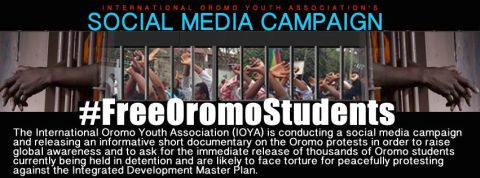
FreeOromoStudents Social Media Campaign to Begin This Weekend by IOYA


What “the government of Ethiopia doesn’t want the world to know”:
#FreeOromoStudents Social Media Campaign to begin this weekend by the International Oromo Youth Association
Gadaa.com
Kulani Jalata
June 26, 2014
On April 25, 2014, a reported 47 peacefully protesting students were gunned down by federal security forces in Ambo, Oromia region, Ethiopia.
“The government of Ethiopia doesn’t want the world to know about what has been happening with the [Oromo] student protests, that federal forces have used violence against the students, that there have been mass arrests of students, that there are allegations of beatings and brutality. The government doesn’t have any incentive to have outside forces to do an investigation. So there are certain barriers to spreading the word.”
These are the words of Amy Bergquist, a human rights attorney at Advocates for Justice, in a newly produced documentary by the International Oromo Youth Association (IOYA). During April and May of this year, Oromo[1] university students across Oromia, Ethiopia, organized peaceful demonstrations against the “Integrated Development Master Plan”, a government plan to expand the capital into the state of Oromia. The capital city’s municipal expansion into Oromia would invariably result in mass evictions and the displacement of millions of poor farmers. When students decided to peacefully protest the expansion plan, they were met with bullets, as reported by BBC (video), Al Jazeera, and the Guardian. Leslie Lefkow, Human Rights Watch’s deputy Africa director stated, “Ethiopia’s heavy handed reaction to the Oromo protests is the latest example of the government’s ruthless response to any criticism of its policies. UN member countries should tell Ethiopia that responding with excessive force against protesters is unacceptable and needs to stop.” On May 6, 2014, Ethiopia was summarily grilled at the United Nations Human Rights Council’s Universal Periodic Review regarding its human rights violations against Oromo student protestors.
While it is true there have been “barriers” as Bergquist notes to documenting the protests and the Ethiopian government’s violent response because of the absence of free media in Ethiopia, diaspora Oromo communities organized worldwide protests in May and created a website to raise awareness about the Oromo student protests. Now, the International Oromo Youth Association is embarking on a social media campaign, starting this weekend, to continue advocating for the rights of the Oromo students that were not only gunned down and killed, but that were also imprisoned and are currently languishing in Ethiopian prisons known for torturing prisoners of conscience and their inhumane living conditions (BBC, U.S. Dept of State). Below is IOYA’s documentary on the Oromo protests, including eyewitness accounts from Peace Corps volunteers Jennifer Klein and Josh Cook. Jennifer and Josh had been working in Ambo on a health project when the protests began in Ambo and security forces responded: “Every few minutes, we were hearing gun shots. Sometimes we would hear what sounded like an explosion followed by a round of 30 or 40 gunshots. Sometimes there were gunshots within a block or two of our house…the gunshots were so close that it frightened both of us a lot.” Not only did Josh and Jennifer bear witness to the massacring of students that day as well as the loading up of buses and trucks of protesting students by police officers to be shipped to prisons, but they also witnessed Ethiopian police officers follow two of their neighbors into their home while the protests were taking place across town and shoot them to death. “That’s when Jen and I were very frightened,” Josh said. “We couldn’t believe that the police would enter somebody’s private home and shoot them in their home. It was awful.”
The Ethiopian government’s response to the Oromo student protests is only the surface of the Ethiopian government’s repressive and violent approach to governance and politics. In 2005, unarmed Oromo students protesting against fraudulent election results were also met with violence and live ammunition, political imprisonment, and torture, and for years, Human Rights Watch has been reporting the government’s use of surveillance, arbitrary detention, and torture to severely restrict freedom of expression, association, and assembly.In the documentary, Josh notes that people in Ethiopia today are “not allowed to say anything” in critique of the government, otherwise risking imprisonment. “People have absolutely no voice at all.”

 View Short Documentary Here   https://www.youtube.com/watch?v=E31gqU_fbpM


Amane Badhasso, the current president of IOYA, says that the purpose of the IOYA campaign on the Oromo student protests is to raise global awareness and to ask for the immediate release of thousands of Oromo students currently being held in detention and very likely being tortured for simply protesting against the Integrated Development Master Plan. “We want to show the world that a government’s disregard for basic human and constitutional rights is unacceptable,” she says.
[1] The Oromo are the largest ethnonational group in Ethiopia, constituting almost 40% of the population.

Declaration of Unity of the OLF


Aasxaa ABO-8.25.13June 28, 2014 (Oromo Liberation Front) — It is with great pleasure that we announce to our people and the supporters of our struggle for freedom the good news that, based on the accord they made in Kampala, Uganda, in November 2012, the two organizations of the Oromo Liberation Front (OLF) known as OLF Shanee Gumii (”OLF National Council”) and OLF Qaama Ce’umsaa (”OLF Transitional Authority”) have resolved our differences and agreed to combine our two leaderships, unify our members, merge our organizational structures and inaugurate a reunified OLF. Although OLF has encountered many obstacles during the last forty years, there was no time when it has stopped the struggle that it was established to lead. No one can deny the fact that the national struggle led by the OLF has scored many victories and made many significant achievements that have taken the Oromo people a long way toward the national goal of independence. Among these great achievements is the level of political awareness of our people.
At the same time, we witness that the Oromo people are being targeted for extinction more than any time before. Oppression has reached intolerable levels making our people to rise up in defiance of tyranny, protesting peacefully in all corners of Oromia. But, as witnessed in the killings of students and others in many places in Oromia, the TPLF regime is responding violently to their lawful demands. Defying enemy atrocities, imprisonment, and torture the young Oromo generation are making it known to the world that they will not tolerate humiliation and oppression anymore and that they will make the necessary sacrifices to liberate their people and homeland from alien oppressors. The OLF extends its condolences to families who lost their beloved sons daughters and expresses its admiration for the courage and bravery they have shown by the young Oromo generation to defend their people’s legitimate rights. As the vanguard of the Oromo struggle for freedom, we re-iterate our determination to continue the struggle until our people become masters of their destiny.
The re-unification of the two organizations of the OLF is a great step that will strengthen the Oromo struggle for freedom. United under one leadership, we are resolute to realize the principal objective of our struggle, namely the liberation of our people and the independence of our homeland Oromia. There is no question about the popularity of the goal of OLF-led liberation struggle among the Oromo people. Therefore, it is with determination that we pledge to make the necessary sacrifices, withstand the challenges ahead and carry through the Oromo national struggle to the ultimate goal of independence.
We are well aware that there are Oromo nationals who are organized separately under other names to advance our people’s legitimate rights. We will do all we can to coordinate our efforts with them to achieve the common goal. The OLF leadership states its decision and commitment to continue to work and conclude the ongoing talks with other forces committed to the same goal. Hence we call on all Oromo organizations that uphold our people’s right to self-determination and independence to join us in carrying out this sacred mission.
We also take this opportunity to express our solidarity with the oppressed nations, nationalities and peoples who are struggling for justice against the same tyrannical regime, and call upon them to join us in the common struggle for basic human and democratic rights.
The TPLF-led regime’s violence against the Oromo people is abetted by military, political and economic assistance from external powers. The OLF appeals again to governments, both in the West and East to strike a balance between their national interests and their international obligation of protecting human rights and stop giving economic, military and political support to a brutal regime that is evicting our people and others from their land and killing innocent civilian who are peacefully demanding their legitimate rights.
Victory to the Oromo People!
Oromo Liberation Front
June 28, 2014

Thursday, June 26, 2014

17 ORTO journalists are fired

17 journalists of Oromia Radio and Television Organization (ORTO) have been fired. The journalists say they received no prior notice and learned of their fate this morning when security prevented them from entering the station's compound located in Adama. Members of the management informed the journalists that they cannot help them as decision terminate their employment and the list of names came from the federal government. This firing follows a 20 day reindoctrination seminar given to journalists and reporters of the ORTO and workers of the region's communication bureau.Main agenda's for the seminar were the ongoing ‪#‎OromoProtests‬ and the upcoming election. Speakers at the seminar included Bereket Simon, Waldu Yemasel ( Director of Fana broadcasting), Abreham Nuguse Woldehana and Zelalem Jemaneh.

Wednesday, June 25, 2014

A new master plan:Complicated-turned-deadly


master

A recent plan to build a fantastic Addis Abeba is complicated and has turned deadly. It is not terribly late for a u-turn, but the first step may be the hardest: bringing justice to the dead    
Kalkidan Yibeltal
For a number of universities located in Ethiopia’s Oromia regional state, the largest state in the country, the month May was no ordinary month. It was a month marked by extraordinary exhibition of solidarity by the country’s ethnic Oromo students who protested the coming into effect of a master plan by the Addis Abeba City Administration (AACA). As is always the case with Ethiopia, the protests resulted in the regrettable (and unnecessary) loss of lives, destruction of properties and disruption of the academic schedule. If one is to stick by it, the government’s own account put the number of deaths at 11, of which seven were in Ambo, a town 120 km west of the capital Addis Abeba. Other deaths occurred in Meda Walabu University in Bale, 320 km southwest of the country; and in one of the oldest state universities, Haromaya, in east of the country, a bomb explosion at the campus’s stadium during a European soccer match screening injured 70 students, killing one. The spiral of dissent didn’t leave the grand Addis Abeba University in the capital untouched either. A looming protest by the campus’s Oromo students sparked a massive deployment of the Federal Police in and around the campus. Soon other towns in the regional state, among others, Dembi Dolo, Adama, and Gimbi followed suit, not without the usual unfortunate causalities. Although the riots have since subsided, sources say the work of picking up and jailing by the security officers of those students whom the government blames are behind the arrest is in full swing. These sources also put the number of death way higher than the government’s.
The making of a giant city
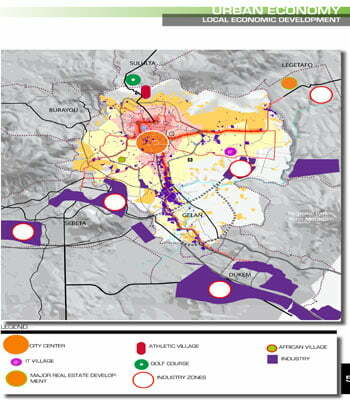
Oromo students in these campuses have reacted angrily when learning about a new plan by the Addis Abeba City Administration that wanted to integrate the capital with its surrounding localities. Indeed, the ill-fated master plan was no ordinary plan; it sought to incorporate the eight of the neighboring towns inhabited mainly by the country’s largest ethnic group, the Oromo, and currently administered under a special zone by the Oromia Regional State. Many of them feared the plan wanted to bring these towns into one giant administration under the AACA.
Their demands for further explanation on the master plan was quite a legitimate one, as even some senior government officials within the ruling EPRDF, such as Abba Dulla Gemeda, Speaker of the House of Peoples’ Representatives and former president of the Oromia Regional State, would later concur, although he didn’t approve of the way the protests have gone and were handled.
Untitled-4
In its 126 year long history of serving as a capital of the nation, Addis Abeba has certainly passed through tremendous changes. The last two decades, however, have seen a significant increase in population as well as spatial expansion on all directions. According to data from the now infamous ‘Addis Abeba and the Surrounding Oromia Special Zone Integrated Development Plan’, in the last two decades alone the city, currently home to between three to four million inhabitants, has witnessed an 80 per cent population growth while the total built up area of the city has increased by at least 25 per cent in the past ten years.
Indisputably, the areal extension and the significant increase in the number of inhabitants compel city administration authorities to prepare a formidable plan B on how to run the city and provide its people with the much needed services such as housing, water and transport. In an attempt to address this dilemma, the 9th City Master Plan, adopted in 2002 and implemented as of the following year, restructured the Addis Abeba city into 10 sub city administrations. It went as smooth as restructuring a city deprived of essential provisions in the past can go. The problem started surfacing when its successor, the 10th Addis Abeba and Oromia Special Zone Integrated Development Master plan, which was in the making for the last two years, finally came off as ‘Addis Abeba and the Surrounding Oromia Special Zone Integrated Development Plan’ (please see commentary on How not to make a master plan).
It was the first sign of a city master plan that went a lot further than its predecessor by aspiring to incorporate the neighboring areas. “Developing an internationally competitive urban region through an efficient and sustainable spatial organization that enhances and takes advantage of complementarities is the major theme for the preparation of the new plan,” says Mathewos Asfaw, general manager of the project office.
Ethiopia wants to join middle income countries in a decade from now but this will not happen if one is to go by its current level of urbanization. The overall economic tale of the country, particularly its relative success in attracting Foreign Direct Investment (FDI), is strongly tied to the investment performance of Addis Abeba city and its surrounding areas under the Oromia regional state. It is a reality that may have ignited a soaring ambition by the authorities who commissioned the disputed master plan, which wanted to cover a size of 1.1 million hectares, and has incorporated a number of overambitious, Cinderella-like proposals from water to transport to housing provisions that, given how plans go down to earth in this country, one has to consume with a grain of salt.
Constitutional gaffe
When the integrated master plan came into public scrutiny a couple of months ago, it was met with fierce criticism from the middle and lower level politicians of the Oromia Regional State. The master plan’s questionable legal provisions were put under scrutiny but were recklessly dismissed by the authorities who commissioned it. Mathewos Asfaw, as were the other higher level politicians of the Oromia Regional State, was quick to play down fears by some of the Oromia regional state officials about the constitutionality of the plan in nature. He told a local newspaper that it was not his or his office’s authority to deal with that. “They are not compatible with the project office,” he said.
Article 49(5) of the Ethiopian Constitution clearly states that “the special interest of the State of Oromia in Addis Abeba …shall be respected….in terms of provision of social services, utilization of natural resources and joint administration matter”. Mathewos may be justified as this is clearly beyond the mandate of the project office. However, “spatial plans do not operate in a vacuum,” says Ezana Haddis, a lecturer at the Ethiopian Civil Service University Institute of Urban Development Studies. This was further exacerbated by absence of any proclamation that could define and assure the state’s privileged right over the capital, Concordia to Ezana.
Urbaa Cover
Of language and identity: back to square one  
Art. 46 (2) of the country’s constitution guarantees “States shall be delimited on the basis of settlement pattern, language, identity and consent….” For the Oromo whose right over the land under discussion is constitutionally guaranteed by the federal system the country says it governs itself with, any spatial expansion is more of a question of identity, of right over the land and of justice than a mere economic gain, which is what the Addis Abeba City Administration officials wanted them to believe.
Historically Addis Abeba city was a land of the Oromo with an original name in Oromiffa: Finfinnee, one of the many factors that make the draft metropolitan master plan a delicate matter than a political choreography.
Unfortunately, this is not the first time the federal government has imposed its unorthodox political might in the control over the capital, and the protesting Oromo students and those who closely indentify themselves with the cause of the Oromo in the country knew it all too well. In 2003, the federal government’s decision to relocate the seat of the Oromia Regional State from Addis Abeba to Adama town, 100km east of the capital, resulted in another protest that ended up with the killings of more than a dozen students and the imprisonment of hundreds by the federal security apparatus. “The dramatic return of the seat of the Oromia Regional State back to Addis Abeba two years later had much to do with the total victory by the opposition of the Addis Abeba city administration than any bureaucratic jargon the federal government wanted the Oromo people to believe”, says an Ethiopian professor of anthropology at the Addis Abeba University.   “This too, didn’t pass unnoticed.”
In 2008 eight towns surrounding Addis Abeba -  Dukem, Sebeta, Burayu, Gelan, Sululta, Holeta, Sendafa and Legetafo- and are administered by the Oromia Regional State were assembled to form the Finfinee Special Zone. Awol Abdi, head of Oromia Special Zone Land Administration and Environmental Protection Office, told a local newspaper then that the rationale behind such a move had to do with halting the overflowing demand of land by the Addis Abeba City Administration.  But for the watchful eyes of those who closely follow the federal government’s move not just since 2003 but since the beginning of 2000 following the establishment of the Ministry of Federal Affairs (MoFA), this was not a good explanation. “Since the establishment of the MoFA, constitutional interpretation of the rights of nations and nationalities has taken a more centralized form with more power coming back to the federal government to decide on issues that have more economic impacts such as land and other natural resources,” said the professor at the Addis Abeba University who wants to remain anonymous.  “The federal government is in almost absolute control of the political and military power. What is missing is the economic power and this master plan is nothing but an attempt to establish the missing economic primacy over that of the constitutionally guaranteed right of the ethnic Oromos over their land. We are back to square one.”
When one scratches the surface of the new master plan it becomes clear that it “proposes the surrounding localities to keep on providing landfill site, waste treatment, housing as well as water resources to the capital with no mention of what the Oromia regional administration could get in return”, Ezana says. He also sees another trigger in the corridor: the boundary between Addis Abeba and Oromia regional state has never been officially demarcated.
The project office, which was originally set up to come up with the master plan only for the capital Addis Abeba but was subsequently tasked to create a metropolitan master plan is unquestionably staffed with experts whose knowledge and experience makes them super qualified for the job, and yet there was no attempt to incorporate the special interest of the regional administration and that of its people, Ezana added, “that was the fault line.”
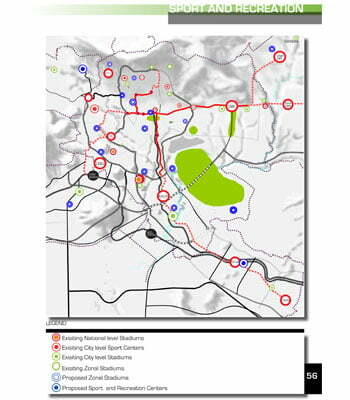
Sport and recreation
Beneath the layer of wrath
In an article titled “A Tragic Consequence of the ‘Addis Ababa Integrated Master Plan: Warning for the Future’,” Dr. Negaso Gidada, a prominent Oromo political elite and a former president of the federal government-turned an opposition leader, says, as the official seat of the Oromia Regional State, the Federal Government and the African Union, Addis Abeba should expand enough to become a decent metropolitan city.
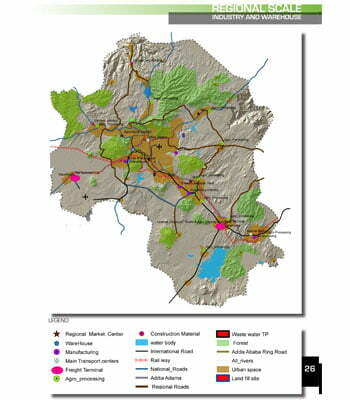
Regional Scale
But this is not a tale of development without cost. In a 2009 research titled “Urban Expansion in Addis Abeba : Effects of the Decline of Urban Agriculture on Livelihood and Food Security,” Mara Gittleman of Tufts University, says in an effort to build a globally competitive city “[e]ntire agricultural communities are moved and left with very little compensation for their land, with no other skills to rely upon. [.. .]  This process of rapid urban development is working both to increase the populations of unemployed and homeless peoples and to decrease the supply of fresh produce available.”
According to Dr. Negaso, “the Oromo are not opposed to the extension of infrastructure to the surrounding towns but want a guarantee that Oromia has jurisdiction over them. They want that the identity of the Oromo be preserved, that the Oromo farmers should not be evicted or if their land is needed that they get proper compensation; that Addis Ababa pays for the services it gets from the surrounding areas…and do something about the depositions of waste substances (domestic and industrial).”
EPRDF sympathizers and naysayers alike argue that this riddle would have been avoided if simple and transparent procedure, such as consulting with the legitimate constituency, were followed in the making of the master plan. “There is no half way to federalism; a country follows either a federal system or a central one,” says the professor at the AAU.
But a senior expert at the AAU’s Center for Federal Studies says the ethnic, religious and language diversity inside the country leaves the country with no other option than to adopt federalism. “The ethnic based federalism we follow certainly has its own discontents,” he says, “but most of it can be tackled by ensuring good governance and implementing the words of the constitution.”
As a long lasting remedial measure, Dr. Negaso recommends a fresh, honest and transparent public discussion on various crucial subjects including federalism and ethnicity. That may be a fundamental change that needs to come around, but for those who have lost their loved ones, the immediate remedial measure is nothing but “holding those who commissioned and executed” the recent killings of the students who protested against the master plan accountable, says the professor at the AAU, “that should be the first step followed by the release of the students who are being hand-picked by the police as we speak.”  He also believes that the federal government needs to stop labeling the protesting students as extremists supported by “anti-Ethiopia peace elements” when the master plan is “infested by countless legal and constitutional holes” and everyone “knows about it.”
Mahelt Fasil contributed to this story  

Saturday, June 14, 2014

The torture and brutal murder of Alsan Hassen by Ethiopian police will shock your conscience


alsanHassan(OPride) A 21-year old Oromo student, Nuredin Hasen, who was abducted from Haromaya University late last month and held incommunicado at undisclosed location, died earlier this month from a brutal torture he endured while in police custody, family sources said.

Members of the federal and Oromia state police nabbed Hassen (who is also known by Alsan Hassen) and 12 other students on May 27 in a renewed crackdown on Oromo students. Friends were not told the reason for the arrests nor where the detainees were taken.
Born and raised in Bakko Tibbe district of West Shawa zone, Alsan, who lost both of his parents at a young age, was raised by his grandmother.
The harrowing circumstances of his death should shock everyone's conscience. But it also underscores the inhumane and cruel treatment of Oromo activists by Ethiopian security forces.
According to family sources, on June 1, a police officer in Dire Dawa called his counterpart at West Shewa Zone Police Bureau in Ambo and informed him that Alsan “killed himself” while in prison. The officer requested the local police to tell Alsan's family to pick up his body from Menelik Hospital in Addis Ababa, Ethiopia's capital.
The West Shewa zone police relayed the message to the district police station in Bakko Tibbe and the latter delivered the message to Alsan’s family. Three family members then rushed to the capital to collect the corpse of a bright young man they had sent off, far from home, so that he can get a decent shot at college education.
Upon arrival, the hospital staff told the family to search for his body from among 30 to 40 corpse’s kept in a large room. According to our sources, what they saw next was beyond the realm of anyone's imagination. The details are too gruesome to even describe.
They found their beloved son badly tortured, his face disfigured and barely recognizable. His throat was slit leaving only the muscles and bones at the back of his neck connecting his head to the rest of the body. There were large cuts along his eyelids, right below the eyebrows as if someone had tried to remove his eyes. There were multiple wounds all over his face and head. Both of his arms were broken between his wrists and his elbows.
It appeared as if the federal forces employed all forms of inhumane torture tactics, leaving parts of his body severely damaged and disjointed. The family could not grasp the cruelty of the mutilation carried upon an innocent college student.
Their ordeal to recover Alsan's body did not end there either. Once the body was identified, the federal police officer who brought the body from Harar told the family to pay 10,000 birr (roughly $500) to cover the cost of transportation the government incurred. They were informed that the body will not be released unless the money is paid in full.
The family did not have the money, nor were they prepared for the unexpected tragedy. After friends and relatives raised the requested sum to cover his torturers costs, Alsan's body was transported to Bakko Tibbe, where he was laid to rest on June 2. There was little doubt that Alsan was murdered while in detention, but in police state Ethiopia, the family may never even know the full details of what happened to their son, much less seek justice.
In an increasingly repressive Ethiopian state, being an Oromo itself is in essence becoming a crime. To say the gruesome circumstances surrounding Alsan's death is heart-wrenching is a gross understatement. But Alsan's story is not atypical. It epitomizes the sheer brutality that many Oromo activists endure in Ethiopia today.
NimonaTilahunOn June 6, another Oromo political prisoner, Nimona Tilahun passed away in police custody. Tilahun, a graduate of Addis Ababa University and former high school teacher, was initially arrested in 2004 along with members of the Macha Tulama Association during widespread protests opposing the relocation of Oromia's seat to Adama. He was released after a year of incarceration and returned to complete his studies, according to reports by Canada-based Radio Afurra Biyya.
Born in 1982, Tilahun was re-arrested in 2008 from his teaching job in Shano, a town in north Shewa about 80kms from Addis Ababa. He was briefly held at Maekelawi prison, known for torturing inmates and denying legal counsel to prisoners. And later transferred between Kaliti, Kilinto and Zuway where he was continuously tortured over the last three years. Tilahun was denied medical treatment despite being terminally ill. His death this week at Black Lion Hospital is the third such known case in the last two years.
On August 23, 2013, a former UNHCR recognized refugee, engineer Tesfahun Chemeda also died  under suspicious circumstances, after being refused medical treatment. In January, a former parliamentary candidate with the opposition Oromo People's Congress from Calanqo, Ahmed Nejash, died of torture while in custody. These are the few names and stories that have been reported. Ethiopia holds an estimated 20 to 30 thousand Oromo political prisoners. Many have been there for more than two decades, and for some of them not even family members know if they are still alive.
While Alsan, Chemeda, Nejash and Tilahun's stories offer a glimpse of the brutality behind Ethiopia's gulags, it is important to remember thousands more face similar heinous abuses everyday.
Since Oromo students began protesting against Addis Ababa's unconstitutional expansion in April, according to eyewitnesses, more than a 100 people have been killed, hundreds wounded and many more unlawfully detained. While a relative calm has returned to university campuses, small-scale peaceful protests continue in many parts of Oromia. Reports are emerging that mass arrests and extrajudicial killings of university students are far more widespread than previously reported. Last month, dozens of students at Jimma, Madawalabu, Adama and Wallagga universities were indefinitely dismissed from their education. In addition, an unknown number of students from all Oromia-based colleges are in hiding fearing for their safety if they returned to the schools.
Given the Horn of Africa nation's tight-grip on free press and restrictions on human rights monitoring, in the short run, the Ethiopian security forces will continue to commit egregious crimes with impunity. But the status quo is increasingly tenable. For every Alsan and Tilahun they murder, many more will be at the ready to fight for the cause on which they were martyred. As long repression continues unabated, the struggle for justice and freedom will only be intensified. No amount of torture and inhumane treatment can extinguish the fire that has been sparked.
*The writer, Amane Badhasso, is the president of International Oromo Youth Association, and a political science and legal studies major at Hamline University. Badhatu Ayana is an Oromo rights activist. 

source : opride.com